

“I almost didn’t come back,” I whispered to the student standing next to me. It was a cloudy mid-morning, and our second pickleball lesson was about to begin.
“Me, too,” Jeremy said, nodding, a knowing look in his eyes. He cocked his head toward our instructor, Shirley, who was on the far side of the court fiddling with the controls of a mechanical pickleball launcher. “You know she’s a retired junior high school gym teacher, right?” he added.
“Hmph! Figures,” I retorted, as I removed my paddle from my blue cinch bag.
I’d first played the game the month before. Four friends hit a wiffle ball back and forth over a net on an area one quarter the size of a tennis court. The sunshine was abundant, the volleys friendly, the conversation easy. Laughter erupted often. My introduction to a sport with a funky name that everyone was talking about was such a hoot that, at age 59, I enrolled in a series of four weekly beginning pickleball classes at the local recreation department.
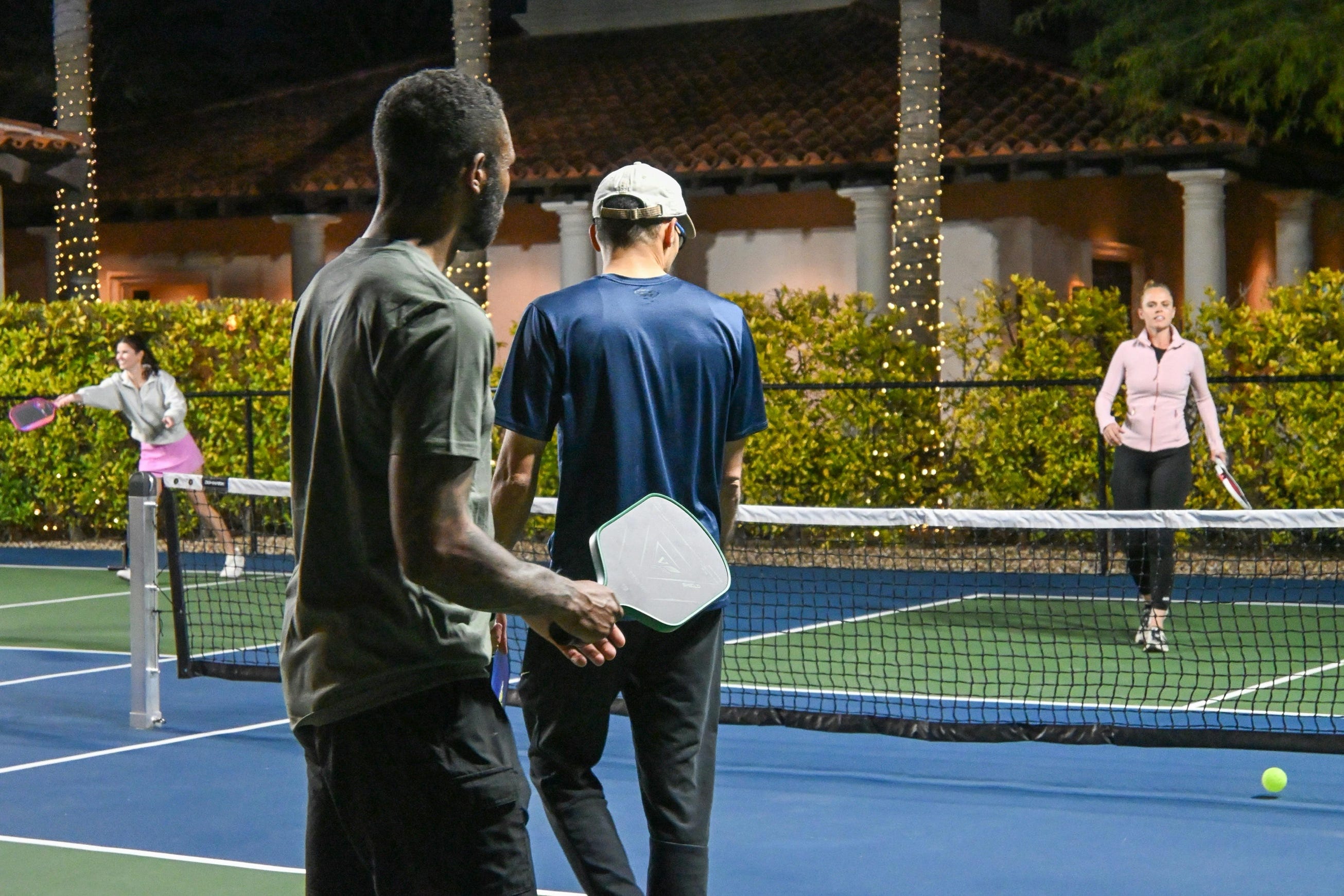
Photo by Jessie Kiermayr on Pexels
I assumed lessons would be just as casual and social as playing with my friends. Boy was I in for a rude awakening. “Come on! Get to your places!” the instructor yelled as my first outdoor class began. “We don’t have all day.” She glared at us. The seven other students and I looked at each other in confusion; she hadn’t told us where to go. Who was this woman? Wearing an old navy track suit with a stark red visor and dark sunglasses, Shirley was petite and rail thin with short grey hair. She looked like a prison warden’s mother.
Standing on the other side of the net, she pointed at each one of us to step into the court and return her volley. I was first up. “No!” she erupted after I returned her ball. “NO backhand. Use the forehand, just like I showed you!” The trouble was that she hadn’t demonstrated, nor had she instructed us on how to return the ball. How was I to know we were supposed to hit forehand only?
My shoulders fell as my spirits sank down an old familiar abyss. What had been a warm, sunny day now felt chilly. It was as though I were being transported back to that ancient hell realm known as sixth-grade gym class. We were on the football field lined up to scrimmage. Planted in the ground across from me towered Brian Masters. While I probably weighed all of 60 pounds and rarely touched a ball of any kind, Brian was a natural athlete who weighed at least twice that. When he spotted me, a gleeful glint appeared in his eyes. “I’m gonna clobber you, Glaser!” he leered, grinning ear to ear. My stomach lurched, and my knees went weak. “Get out of my space!” I wanted to shriek. Tongue frozen in place, my mouth was unable to form words. When it came time to tackle, I somehow mustered the ability to get out of the way. At least I was fast. Darting and dodging for the next endless hour, I managed to sidestep the action until, with one final, earsplitting whistle, torture time was over for the day. I could go back where I belonged: indoors, completing my assignments, writing plays for my puppets, and assuming the stance that makes teachers’ pets the world over swoon: standing next to Mrs. DeSoto as I filed her bottomless stack of papers.
Back on the pickleball court, a more experienced student offered to step in and demonstrate the forehand drill. With my face drooping in a complex mixture of humiliation, gratitude, and relief, I stepped aside and allowed her to do so. Meanwhile, a harried Shirley scowled. Just as in sixth grade, I didn’t say a word. Silent self-affirmations helped me refute the deep-seated self-defeating beliefs bubbling up from deep inside: This has nothing to do with my competence or self-worth, I told myself. I’m just learning a new skill. Everyone struggles when trying new things.
Later at home, I found myself in another kind of pickle as I debated whether to quit or return for a second lesson. Sure, I had learned about pickleball, but I didn’t expect or appreciate the instructor’s heavy-handed approach. On the other hand, wasting my hard-earned money makes me crabby, and the no-refund policy was clear. After some thought, I decided to give Shirley the benefit of the doubt. Maybe she was having a bad day. I chose to give it at least one more try.
Sharing my feelings with Jeremy at the onset of the second class—and having him validate them and agree with me—helped boost my spirit. It was good to know I wasn’t the only one who didn’t like how harsh Shirley could be. Jeremy and I paired up after that, encouraging each other, even if Shirley didn’t.
Halfway into the third class, I saw Shirley watching me practice serves. “Hit the ball deeper!” she yelled. I tried to hit the ball deeper. PLUNK! My next ball landed right in the net. “Deeper means closer to your opponent!” Shirley screeched.
“I know!” I heard someone yell back. “I’m doing the best I can!” I was stunned to realize the voice and words were mine. After years of silence on the sports arenas of my youth, repeatedly being called “fag” in public without recourse, and endless moments of silent terror as my mom raged at me, the words seemed to burst from my mouth of their own accord. All the work I had done on myself over decades—coming out as gay, becoming a psychologist, my own psychotherapy—seemed to come together in that one powerful moment. POW! My paddle hit the next ball. THUNK! It landed right at my opponent’s feet, pickleball’s hailed unreturnable ball. “That’s what I’m talking about,” Shirley said. Then she turned her attention to another player.
Without planning to, I had stood up for myself. Just as impressive, no one got upset, no one stormed off the court, no one died. No one else even seemed to notice. But I knew this was a victory to savor. Whether I found my voice or my voice found me, I told an irritable authority figure to back off, and she did. Tiny fireworks seemed to sparkle in my spirit, and the corners of my mouth curled up in a grin. A load I didn’t know I had been carrying lifted from my shoulders, and I seemed to grow taller. That’s what I’m talking about.
What’s Bothering Shirley
Speaking up for myself on the pickleball court didn’t end with my third lesson. In time, I signed up for more of Shirley’s classes. Although she remained callous, I kept showing up. A variety of unrehearsed responses flew from my mouth. Once I yelled back, “That’s not helpful!” Another time, I remained calm and said, “When you say it to me that way, it’s harder to hear.” “Don’t start with me, Shirley,” was a juicy retort that makes me particularly proud. Each time she adjusted accordingly, and each time I glowed at the realization that even people in charge can be put in their place.
One day Shirley showed up to class in a wheelchair after having foot surgery. She’d apparently been in severe, chronic pain when I first took lessons, which explained the extra edge in her voice. Even from the wheelchair, she remained the old-school gym teacher, loud and demanding, but she was now less explosive, piercing, and dismissive. She could have taken months off to recover from those surgeries. Yet here she was, rolling herself around the court even if she couldn’t walk, let alone play her beloved game. They don’t come tougher than that.
It was a miraculous day when Shirley and I shared a laugh on the court over the audacity of a new student who refused to pick up her own stray balls. While her general style did not alter—Shirley remained more drill sergeant than ringside cheerleader—I came to see that she loved the game and was invested in her students’ improvement. Her boundless energy and limitless ideas (who knew there are so many ways to drill!) astounded me. While Shirley would likely never be described as warm and fuzzy, it dawned on me that her diligence, creativity, and attention are how she demonstrated love. Twice, at random times, I gave her gifts: a pickleball retrieval tube and a gift certificate for a massage. I’d call that a pickleball breakthrough.
Shirley wanted to make me a better pickleball player. I daresay she did. But she did more than that. She helped me see beyond my own assumptions and stereotypes. She was and remains an indelible part of helping me find my voice, on and off the pickleball court.
* * *
UPCOMING EVENTS
With ICE’s presence and horrendous actions these past few months, it’s been a hard time to be a helper in Minnesota. In myself I’m noticing a heavier heart, lower energy, and increased compassion fatigue—and I know I’m not alone. With the reduction in local ICE activity, it’s tempting to think it’s all behind us and we’re over it, yet it is wise to attend to what might be—and in fact is likely—lingering in our minds and bodies.
That’s why I’m volunteering to help organize two efforts to address the impact on us as both community members and as healers. Please join us and help spread the word.
Vicarious Trauma and Helper Burnout
Friday March 20, 3:00-4:30 p.m. CT on Zoom
An Online Workshop and Conversation with psychologist and vicarious trauma expert Irene Greene, MSED
Sponsored by the Trauma Liberation Collective
Sliding scale $25-60. All proceeds go to the facilitator.
Certificate of Attendance provided for CEUs
MORE INFO and REGISTER HERE: https://forms.gle/xoTcN2LR5p2JRpUw8
Collective Trauma, Collective Resilience
Thursday, April 16, 6:00-8:00 p.m. CT on Zoom
Small and large group grief processing with collective trauma experts Louise Marra, SEP, and Laura Calderón la Barca, PhD
Sponsored by Patrick Dougherty, Tom Glaser, and Jessi Leader
$0-100, Pay as able. After expenses, all proceeds donated to community rent support. Facilitators are donating their time.
CEUs pending for BBHT, BMFT, BOSW
MORE INFO and REGISTER HERE: https://buytickets.at/moodyoctopuscollective/2107678
Please register today for one or both events, and please forward this information to folks who might benefit.
* * *
THE HOUSE THAT RESILIENCE BUILT UPDATE
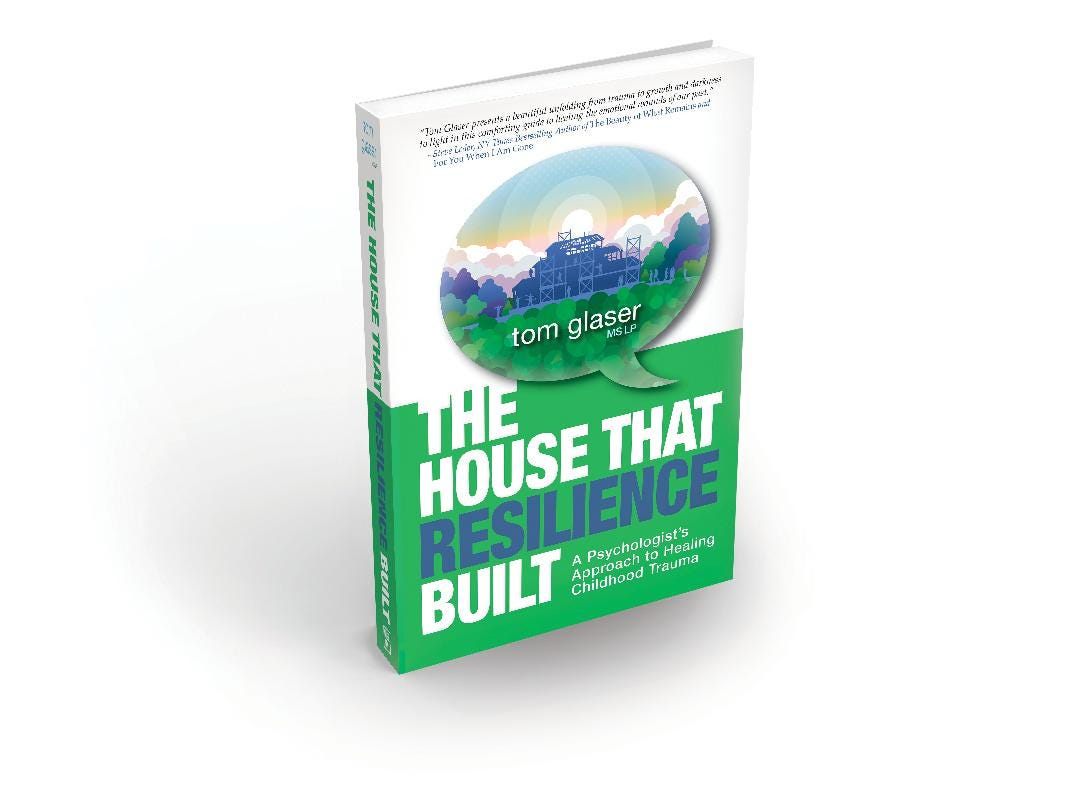
I’m honored and humbled to report that my new book, The House That Resilience Built: A Psychologist’s Approach to Healing Childhood Trauma became a #1 New Release in Popular Psychology Psychotherapy and Medical Psychology Pathologies, and an instant Amazon bestseller in Post-Traumatic Stress. Thanks to all who helped make this happen.
Read the book and like it? Please write a review on both Amazon.com and Goodreads. At least 25 reviews on each platform are needed to maximize the algorithms. Thanks to those who have already reviewed.
* * *
WHAT I’M READING
Just finished The Jackal’s Mistress by Chris Bohjalian. Inspired by true events, this Civil War historical involves the wife of a missing Confederate soldier who discovers a stranded, wounded Yankee officer and must decide what she’s willing to risk for the life of a stranger. I found it a superb read, with distinct, complex characters and a surprise ending. Very well written.

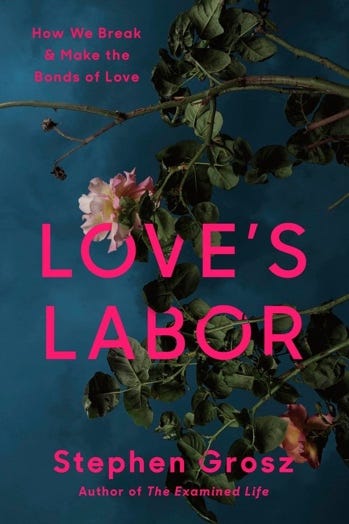
Up next: Love’s Labor: How We Break and Make the Bonds of Love by Stephen Grosz. This book sounds eerily similar to my own new one, The House that Resilience Built. Grosz is an acclaimed author and psychoanalyst who shares true stories from his practice with patients who struggle with remaining connected with their loved ones. Can hardly wait to dive in! I’ll report back after reading.
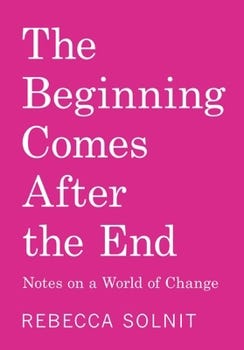
On deck: The Beginning Comes After the End: Notes on a World of Change by Rebecca Solnit. I’ve been following Solnit since last fall as part of my Buddhism in Action practice. She’s whip smart and remains hopeful despite the angst and genuine danger of our times. In her worldview, interconnection is a core idea and value. I—and dare I say we?— need this now!
* * *
REFER A FRIEND: Know someone who could use tips like these? Please forward this post their way. They can click here to subscribe (and get a free workbook to boot!)!
* * *
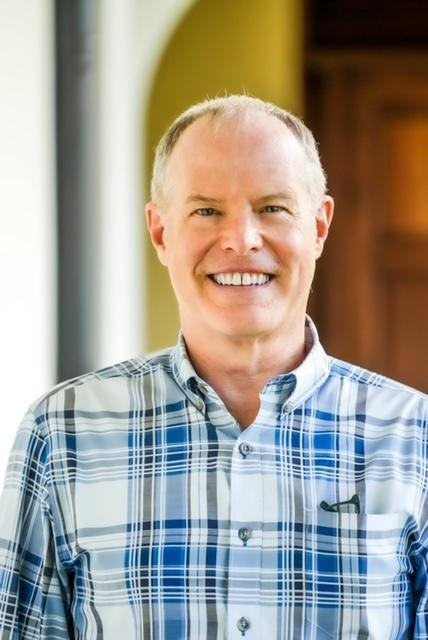
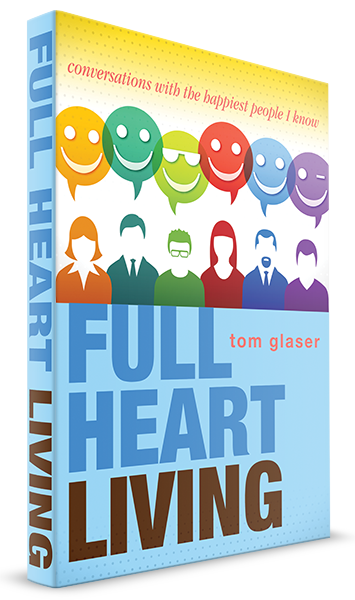
Tom Glaser is a master’s-level licensed psychologist and Amazon best-selling author of The House That Resilience Built: A Psychologist’s Approach to Healing Childhood Trama. He has appeared on more than 100 podcasts promoting happiness and resilience. Also an Amazon bestseller, his first book, Full Heart Living: Conversations with the Happiest People I Know, gave rise to a live performance piece and documentary. He and his husband divide their time between Minneapolis and Palm Springs.
FIND OUT MORE here:
Pickleball can do that to you!