Unraveling Trauma
The Fifth in a Series on Resilient Trauma Survivors

Unraveling Trauma
The Fifth in a Series on Resilient Trauma Survivors
Deep in South Minneapolis, at a daylong continuing education workshop on promoting mental health within LGBTQ+ communities, I attended a session on polyamorous relationships. One of the panelists, Savannah, immediately captured my attention—not just because she was larger bodied and appeared thoroughly comfortable in her skin (clearly, she had no time for others’ “fat phobia,” as she calls it), Savannah stood out because she was articulate and engaging. Exuding a near palpable sense of self-love, she nonchalantly told the crowd about her own polyamorous arrangement. The clincher came when Savannah alluded to having been bullied while growing up in a small (and small minded) outstate Minnesota town. Of course my interest was piqued. Here’s someone who is not afraid to speak her truth, I thought. At the end of the day, I introduced myself and told her that I appreciated her honesty and admired her courage. When I mentioned my resilience and trauma project, her interest was piqued, and she agreed to get together to learn more.
A few weeks later, Savannah and I met at an organic café in Minneapolis’ Uptown area. Her smile was wide, her eyes clear, and she was impeccably groomed, just as I remembered from the workshop a few weeks prior. As we talked, I was further impressed by Savannah ’s self-awareness, ability to express herself, and comfort in her body. What most impressed me, though, was her wide-open heart. I found myself softening in her presence, as though her deep acceptance of and appreciation for herself gave me permission to accept and bring more of myself forward. As a graduate student in social work, she said she was committed to helping others work through trauma, so she eagerly agreed to share her full story.
Five weeks later, we sat together in the shade on the back porch of her South Minneapolis home. Here are excerpts from our conversation.
SAVANNAH
“I never felt like I fit in. There was no way I could. My dad was at the bar all the time. In a rural town of a thousand people, everyone knew. Other kids mocked me about my dad’s alcoholism. Because all the money he made went to his addiction, I grew up in extreme poverty. I went to school not knowing whether he was going to show up to things and what state he would be in if he did show up. There was just no consistency.
“I could not trust him. It wasn’t because he was a liar. It was because once he was drunk, he didn’t remember. In that classic child-of-an-alcoholic way, I always had to be the adult, even to my mom to a certain extent. Not being able to have expectations of adults who are your parents? That trauma never goes away.
“The thing that sticks with me most from my childhood, however, is comments about my body. It was inescapable. I’m obviously fat now, and I was fat from probably about puberty on. I was absolutely tormented around that. Just beaten down.” My brow crinkled as I found myself feeling for her and relating to her story.
“Those voices still ring in my head today. Any time I walk past a group of white, teenage boys, I am tense, waiting for them to say something. That has deeply affected who I am and how I am in the world.
“One loud example was in tenth grade. I had the lead in the school musical Once Upon a Mattress. It’s a small town, so everybody went to these things. There was nothing else to do. Mattress is the story of The Princess and the Pea, in which they can tell she’s a real princess if she can feel a tiny pea at the bottom of a huge stack of mattresses. As the princess, I had to get up on top of a giant platform that was painted like a whole bunch of mattresses. I’m terrified of heights, so I was already having a lot of feelings. I was crawling up this ladder in this big nightgown, hoping I wouldn’t fall. During opening night, as I was crawling up the ladder, a classmate from the audience started mooing out loud. The whole audience started laughing. It was one of the most humiliating moments, on top of already being like, Oh my God. It’s so high off the ground. It would have been horrible without the mooing. But that kind of thing wasn’t special. It was normal. Humiliation was an everyday experience for me. Literally, every day.”
Feeling like I had been stabbed in the chest, I placed my hand over my heart and leaned forward, my face exuding compassion. “I’m so sorry that happened to you,” I said. “What about the adults? Did any teachers intervene?”
“Most of the adults either didn’t take it seriously or tried to give me suggestions of how to change myself to not have them do this to me,” Savannah said. “Which was not okay. Really not okay. That was a deeply unhelpful thing to do. There’s no right way to have a body.
“I learned early on that when I took the risk to be vulnerable with someone safe, and share my truth, especially about something that was not the norm experience, people would light up and say, ‘Me, too!’ It was this radical connection. That’s where some of my resilience comes from. Radical connection over vulnerability.
“One of the most powerful things I have ever personally experienced is hearing somebody else with a similar story when I felt so alone. Finding community was powerful. But it was also important to find myself. And you can’t do one without the other.”
“Where else does your resilience come from? I asked.
“My resilience also comes from my inherent choice and trust to believe This is not forever. Whatever I’m feeling, it is not forever. Feelings are like clouds that will come into you and pass. I have the word Surrender tattooed on one wrist. For me, Surrender is a powerful word. It’s letting what is, be. With that, a lot of space is created.
“On the other wrist is Both/And/All, which to me means more than one thing can be true at once. I can be completely overwhelmed and feel like I can’t do anything but lay in bed with the covers over my head, like everything is terrible, and also acknowledge that everything is not terrible, that there are a lot of really amazing things in my life, even at the very same time as the worst things are happening to me. The practice of holding both of those at once was very helpful for me to plug through those horrible times.”
I asked Savannah if she felt that she had “resolved” or “overcome” her trauma.
“I don’t think trauma ever really goes away,” she said. “I really wish that we could figure out a way to just drop it. That somehow, I worked through it, that it was done, and there’s an absolute ending. There just isn’t. It’s like things catch you off guard at the most unexpected times, and there you are.
“I like to say, ‘Shit comes out sideways.’ I can shove it down all I want, but it’s going to come leaking out of the corners in weird ways, physically, mentally, relationally. It comes out. The consequences are usually harmful, unfortunately.”
“Could you give an example?” I asked.
“Before I began to work through my trauma, at times I thought I was being attacked even when maybe I wasn’t. I would react with defensiveness. Once I learned to notice the defensiveness, I could stop, bring my frontal brain back on board, and then use it to make a different, better choice. It’s a practice.
“Whenever I’m having a trauma-related issue, I picture a tangled-up ball of yarn. When you get a ball of yarn, it seems like a mess. Even if it’s neatly wound, it’s a chore to find the end, right? But if you find the end at just the right place and apply just the right tension, it comes out smoothly. But if you rush it or you pull it at a weird angle or you don’t have the right end, it knots tighter and it gets stuck.

Photo by Markus Spiske on Pexels
“I think with trauma, even if you get to a place where the entire string is laid out flat, you cannot entirely erase the points where it was knotted. So, it might be unknotted right now, but there’s a mark, a little divot in that thread. It’s healed, and in a lot of ways it might even be stronger, like scar tissue. And yet if you bump it or go over it in a weird way, it doesn’t feel quite right, it doesn’t feel normal or un-traumatized.”
“What a perfect way to capture a difficult-to-describe phenomenon!” I gushed.
“It gives a lot of grace,” Savannah continued, “because healing is a process that takes a long time. It takes lots of different things to be able to totally unravel something, such as thoughtfulness, creativity, and reframing. You might get stuck, through no fault of your own. So, you gotta loop around and make a different angle or try and pull on a different part of the string.
“If you truly believe it’s never going to be better and you still are there, getting up every day and doing your life, that feels like strength to me. That’s one thing that I would really label as strong.
“A lot of systemic things were working against me, and I’ve done better than I should have, statistically, given those factors. A huge part of it is that I just don’t take no for an answer. I don’t think I’m rude about it, and I don’t insert myself in places where I don’t belong, but I stand up for myself. I believe I have inherent value.”
* * *
My heart stings when I picture young Savannah ashamed of her family’s lack of financial resources and mocked about her father’s alcoholism. One or both of those would be difficult enough. But I absolutely ache when I hear about the public torment over her weight. Hearing of the unhelpful adults who, instead of holding the tormentors accountable, compounded her suffering by attempting to coach Savannah on how to change herself so she wouldn’t be targeted downright makes me burn. Some of my empathy comes from my own parallel experiences. Growing up, I, too, was regularly persecuted in public, not for my body size but for appearing too effeminate. In my case, grownups who witnessed it ignored it. They didn’t tell me outright to change, as the adults in Savannah ’s life did, but the implications were there: 1) it was my fault, and 2) the bullies’ behavior was tolerable. Beyond being able to relate, to think of someone like Savannah—who exudes positivity and is doing so many good things in the world—enduring such anguish is like a knife through my heart.
Despite potential for her shame and addiction, Savannah emerged as the brilliant, loving, whip smart woman I so admire. Embracing vulnerability was key to getting there, which is one of the things I most want to highlight here. She tells us she learned early on that divulging her experiences to trusted others created “radical connection.” I see this in my therapy clients all the time. Because shame often keeps them from revealing themselves to others, it’s common for trauma survivors to feel isolated. When they learn to take small and then larger risks in revealing themselves, lightness and self-acceptance inevitably follow. They’re lighter because they no longer carry such a burden, and they become self-accepting because others have accepted them.
Christie Tate’s memoir Group: How One Therapist and a Circle of Strangers Saved My Life provides a fitting example from her own group therapy. Despite achieving professional and financial success, Tate was miserable to the point of contemplating suicide. Her therapist assured her that if she joined one of his therapy groups, attended regularly, and was completely honest about everything, she could transform herself. Though skeptical, Tate agreed to try. It didn’t happen overnight, but by revealing herself bit by bit, including relationship entanglements, sexual escapades, and even anal worms—nothing was off limits in her therapist’s groups—Tate’s life indeed was transformed. The magic elixir here is deep (or in Savannah ’s parlance “radical”) connection. By exposing even the parts kept most hidden, and experiencing acceptance, people connect deeply with themselves and others. It’s liberating.
While finding places she belonged was critical, Savannah also acknowledges the importance of finding herself—and emphasizes one can’t be done without the other. The other day I was talking on the phone with a family member from out of state. She said it was sad that she hadn’t felt good about herself until she met her husband, who accepts her, warts and all. “Shouldn’t I love myself first?” she asked. “No need to apologize,” I responded. “If there’s one thing I’ve learned, it is that only in relationship that we discover we deserve self-love.”
Another gem from Savannah ’s story is her yarn metaphor. Most common, minor yarn knots can be unraveled pretty easily, and within moments, the knitter continues constructing the scarf or sweater. The process of unraveling heavily knotted yarn, however, needs a steady hand and a good eye, and requires determination, patience, and skill. A new knitter might enlist a mentor’s help. Same with unraveling childhood trauma. It can be complicated and take time. One must look at things from many angles and try tugging in different places with varying levels of tension. Seeking the help of a trusted guide such as a therapist often helps. Persistence, skillful means, and self-compassion are both required and cultivated. This is part of how surviving trauma can lead to what’s known as post-traumatic growth; such qualities are nurtured and then can be applied to other areas of life. Just as with yarn, however, the thread is not as smooth after unknotting. While it is usable, it’s also altered. It never quite goes back to how it was before. Likewise, with time, fortitude, and tenacity, most trauma survivors can unravel their trauma. Yet they won’t be quite the same. This acts as a reminder to survivors and their loved ones not to expect the person to just revert to how they once were. While grief, sadness, and anger may appear, strengths also emerge. It is this kind of unraveling I explore in my forthcoming book about how psychotherapy instills and reveals resilience in trauma survivors.
* * *
Speaking of my book, at long last, it’s time to reveal the title. My new book, out this Thursday, February 12 is:
The House That Resilience Built: A Psychologist’s Approach to Healing Childhood Trauma
If you’d like to be part of my Book Launch Team, which can include anything from posting on social media to hosting an event, please Direct Message me. I’ll provide a reminder and reveal the book cover in a post later this week.
* * *
Have thoughts, reactions, or comments? How do you unravel tangled difficulties from your past? How has deep connection liberated you? PLEASE POST IN THE COMMENTS BELOW.
* * *
WHAT’S NEXT
MUCH MORE TO COME! In coming Substack posts, I’ll provide book excerpts and continue this series of conversations I’ve had with trauma survivors on how they reclaimed their resilience. Book launch events coming soon.
* * *
REFER A FRIEND: Know someone who could use tips like these? Please forward this post their way. They can click here to subscribe (and get a free workbook to boot!)!
* * *
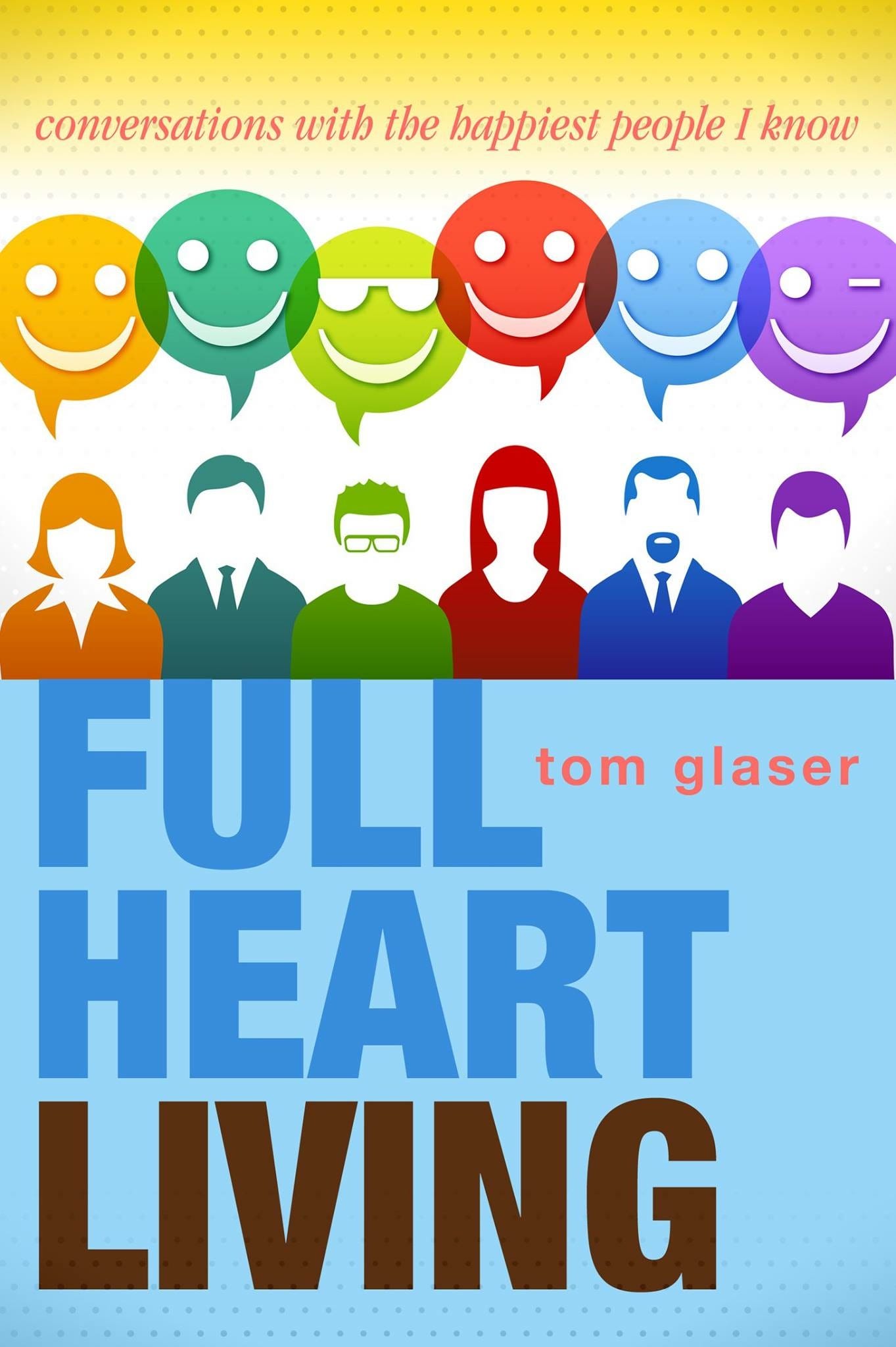
Tom Glaser is a master’s-level licensed psychologist with more than 38 years of professional experience. Following years of childhood trauma, his own journey toward resilience inspired him to specialize in working with trauma survivor clients. As a longtime student and teacher of yoga and meditation, the mind-body connection informs his teaching and psychotherapy practices. He has appeared on more than 100 podcasts promoting happiness and resilience. Tom’s first book, Full Heart Living: Conversations with the Happiest People I Know, was an Amazon bestseller that gave rise to a live performance piece and documentary. He and his husband divide their time between Minneapolis and Palm Springs.
FIND OUT MORE here: